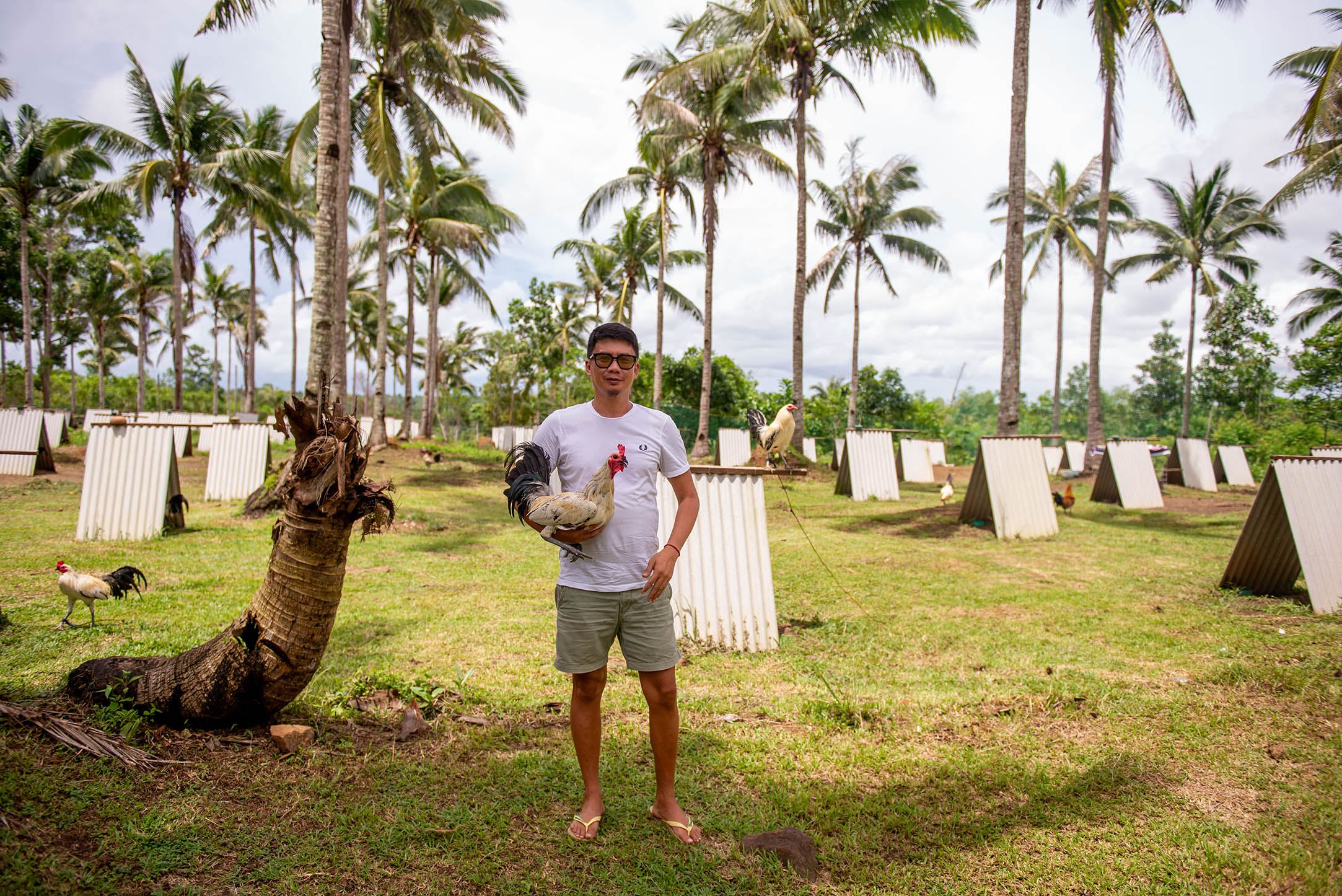


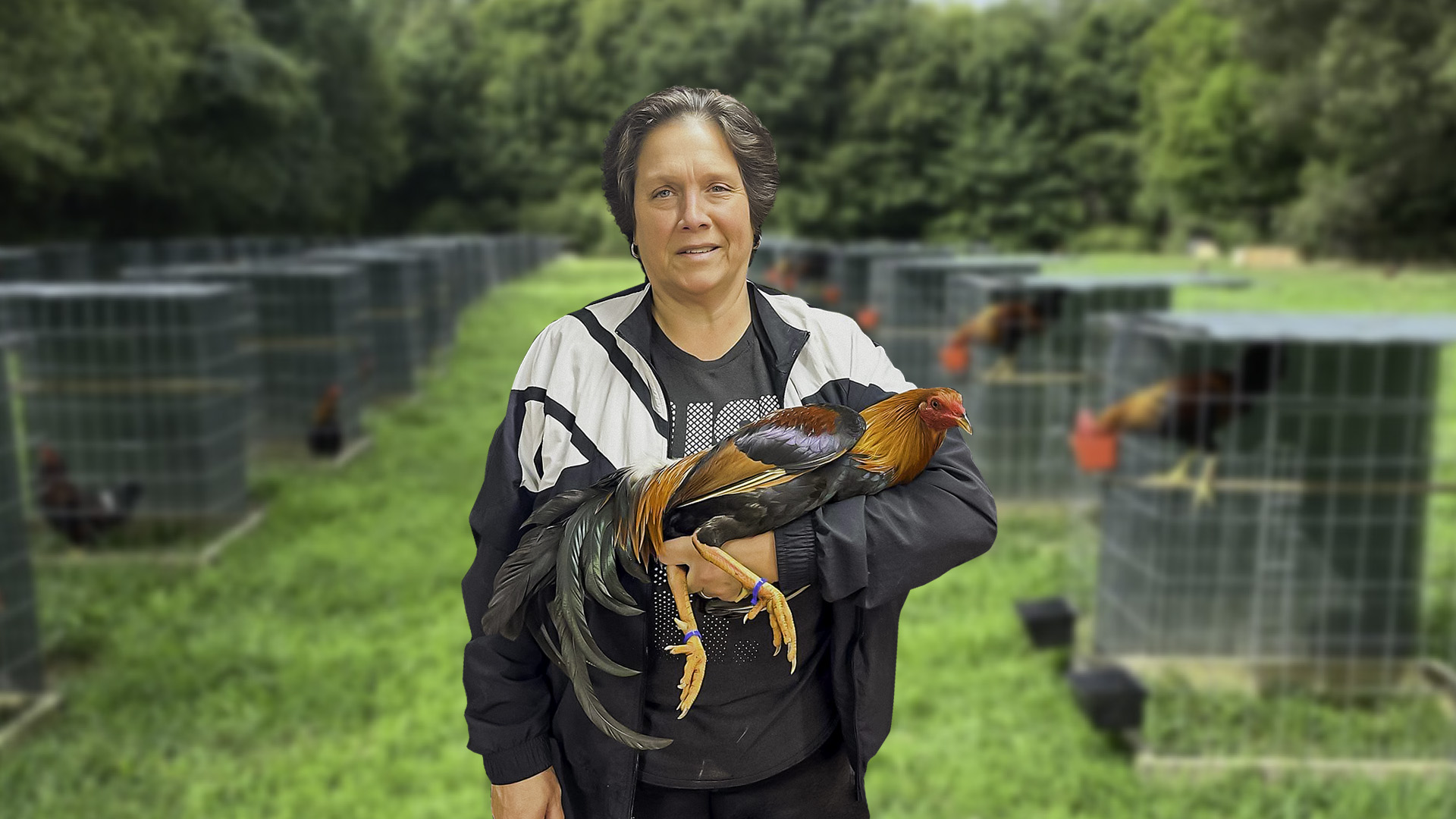
Tammy Shive-Ayala, renowned gamefowl breeder, shares her incredible journey from humble beginnings on her family’s farm to international recognition in the gamefowl industry. Her passion, resilience, and dedication have made her a celebrated figure among breeders and enthusiasts worldwide.
I was a gamefowl breeder long before I became a mother. Gamefowl was my number one love in life until I became a mom, and then, of course, being a mom took first place and always will. My son is so special to me, and beyond life, I do love him.
I approach raising gamefowl and being the best mom I can be in a somewhat similar manner. I’m strict and firm, but I also understand that everyone, including myself, makes mistakes. We must learn from those mistakes and continue to improve.
Can you tell us a brief story of how you started breeding gamefowls and what brought you to this path?
My cousin got me interested in gamefowl around 1985. He was dating a girl whose brother raised gamefowl. I fell in love with the birds’ beauty and their fighting spirit. I asked my cousin to bring me a cock and some hens to turn out on my father’s farm. He brought me a Massey Yellow Leg Hatch cock and four dark hens. I think two were Brown-Red, and two were Joe Sparks Sid Taylors.
I raised nine stags from those four hens and the Massey YLH cock. My cousin saw the stags and told me they were having a get-together on July 3-4, and I should bring a couple of the stags to try them out in a small fight between friends. I didn’t know anything about the fighting aspect, but I took the biggest stags with me to the outing. Everyone there had two-year-olds except me—mine were stags. I won with both of them; one won two fights. They couldn’t believe I beat their cocks.
That’s where I met Mike Shive, my cousin’s girlfriend’s brother. The Massey Yellow Leg Hatch and dark hens I had turned out to be his. He had given them to my cousin to turn out on range somewhere. I met him at that get-together, and the rest is history.
How would you describe the status quo of the American gamefowl industry?
In my personal opinion, we lost the gamefowl industry when we lost the last legal state for cockfighting. Sometimes we take our freedoms for granted and become complacent with the status of bills and the implications of growing laws.
What could be the most memorable moment of your life as a breeder?
I’ve had a lot of amazing memories from the sport, but being invited to the Philippines by Thunderbird in 2014 stands out as one of the most memorable. I went to the Philippines in January 2015.
The advent of stag competition in the Philippines demands early-maturing birds. In your humble opinion as a breeder, what bloodlines suit best?
My favorite cross for the Philippines is 1/2 Radio, 1/4 Sweater, and 1/4 Kelso.
How were you able to build such a following around the globe, most notably in the Philippines?
I think having birds that produce well for the people had a significant influence on my popularity in the Philippines.
When you were starting, was it difficult? How was it when you began breeding gamefowls as Tammy Shive without the luster you have today?
Yes, it was hard in the first few years. I didn’t know anything about breeding gamefowls. I married Mike in 1990, and the knowledge came with him, but we were poor and had to work very hard to feed the birds and ourselves. We milked cows at a dairy farm and raised tobacco for a local farmer. The birds were our love, but we had to win to feed them and ourselves.
Mike passed away in 2004 from pancreatic cancer, which was devastating for me. I had to decide to live or die with him. He was an active person, and we had an amazingly short 15 years together. We lived more in those 15 years than most people do in a lifetime. He taught me a lot about the chickens; he loved them and wanted me to continue. We talked about it, and I think that fact, along with the chickens, is what saved me. I immersed myself in the chickens once Mike passed away. I spent a lot of time with them just thinking. Life changes sometimes, and it’s out of our control for reasons we don’t understand. I would not have had my son if Mike hadn’t passed away, and that’s the way I look at it, which makes it easier to accept.
What bloodlines do you possess that are highly competitive in long knife-style fighting?
The bloodlines we have are Sweater, Radio, Yellow-Legged Hatch, Kelso, Bates Hatch, Leiper Hatch, and Manzel Grey.
Can you give the history of four of your best bloodlines?
The Bates Hatch is my oldest family; I’ve had them since 1990. My late husband, Mike, had them when we met around 1988. They were initially from Richard Bates. They come green and blue-legged, 95% pea combs, though I have gotten a few straight combs. They range from light red to medium red, and the pullets are pinstriped or straw-necked. They are medium breakers with power, plenty of brains, and bottom. They lack speed, as with most hatches, so I usually cross them on speed fowl.
My Sweater, Yellow Leg Hatch, and Radio I acquired from Darrell Wilson in 1994/95. They have all been excellent families for me so far. Darrell is a good friend of mine; he raised birds for Mr. Johnny Jumper from 1977-1988/89.
I acquired Kelso in 2006 from Mr. George Neil, who told me they had come directly from Mr. Johnny Jumper and were the late Cecil Davis families. They have been excellent families as well, with white and yellow-legged pea and straight combs.
During the legal days of US cockfighting, were you fighting your birds?
Yes, we have shown all over the United States, Mexico, and the Philippines with relative success.
As a breeder, how many do you raise every year? What is your culling rate per batch?
Now we raise somewhere around 1,000 stags per season: 500 pure and 500 crosses. Those are penned numbers, so we usually hatch around 2,500. We don’t have a specific cull rate; we start culling at the egg and continue culling until they are in hardening pens. I think culling is essential, perhaps one of the most important aspects of being a successful breeder.
Many starter breeders around the globe are producing winning birds. What do you think is your edge that keeps your customers coming back? What edge do American breeders, as a whole, have that separates them from the rest?
Success brings back customers. That’s pure and simple. If people do well with your product, they’re going to tell other people too. Word of mouth has a way of getting customers.
How do you manage your farm and gamefowl effectively?
Managing any business is hard. You have to be strict, especially when it’s a breeding program. I might be too picky about feed, meds, culling, etc. However, it’s working, so as I’ve told others many times, if it’s working, don’t fix it! My husband, son, and mom are a huge help. It takes teamwork to run any successful business.
Today, your birds are well-known around the globe; how do you make sure that they will perform as advertised? What do you do to maintain or exceed your status?
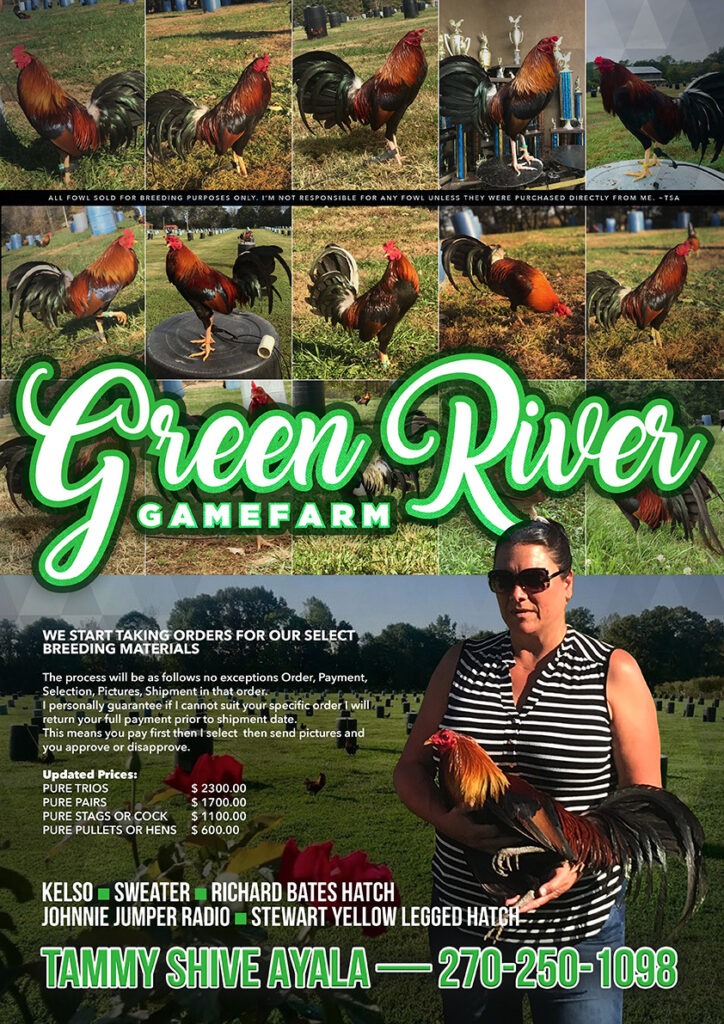
We keep a strict selection protocol on all breeding materials we select for our customers. I make all the selections of breeding materials for my customers. I choose the same quality breeding materials that I require for my breeding pens here at the farm. That way, the performance and quality are in line with our programs here at the farm. We continue to improve the quality of breeding materials every year through selection, and we pass that along to our customers.
From your last visit to the Philippines, what can you say about the state of cockfighting there?
My trip to the Philippines was an enjoyable experience. The people were so lovely and welcoming. I made a lot of friends and can’t thank them enough for the beautiful experience. I look forward to returning with my family. Cockfighting in the Philippines was an excellent experience. The quality of the birds shown was overall impressive.
For people who wish to import materials, can you share with us how they can maximize their acquisition and how they can maintain the bloodline?
We have been exporting birds to the Philippines for our customers since 2009 with excellent success. It’s a natural process, and we can handle everything from start to finish. We guarantee birds to arrive alive and healthy to our customers in the Philippines to ease their worries. We offer a money-back guarantee!
What are the points you can share in selecting a mainstay broodstag, broodcock, and hens?
I select my breeding materials in several different ways. I look for health, proper conformation, balance, and bone structure. I also consider the temperament and mindset of a bird, as well as its willingness to adapt to adverse conditions. The same standard applies to the pullets or hens.
In your standard, how do you categorize a bird as pure?
I think for a family to be considered pure, it must be line-bred and in-bred on both the cock and hen sides. It takes years and years of breeding back into the same family line to achieve pure lines. Anytime you bring new blood into a family to freshen it, in my opinion, it’s a start-over or a new family. I also know from experience that some families take inbreeding and line-breedi ng differently. While it may significantly improve some families, it can also ruin others.
To our reading patrons who wish to start breeding, what can you advise them?
My advice is, no matter where you got your breeding materials, you should start small with 2-3 families only. At first, keep them healthy, vaccinated, and well taken care of. If they are quality breeding materials, they will produce quality offspring for you.
Does this new digital magazine, Purebred Warrior, help our sprawling industry?
Oh, definitely. I think the more people you expose to the industry, the more options customers have and the better view they get of the industry.